THE PROCEDURES
Gastric Bypass Surgery
The Roux en-y Gastric Bypass (RYGB) is considered the “gold standard” of modern obesity surgery — the benchmark to which other operations are compared.
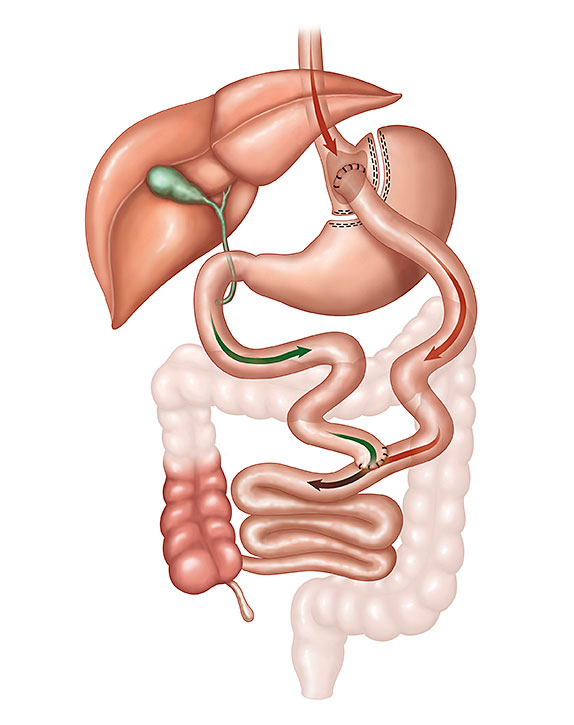
RYGB works to help people lose weight by three, primary and interacting benefits: Restriction, Metabolic Changes, and Malabsorption.
Restriction occurs because the stomach is divided and a much smaller stomach or “pouch” (about the size of a walnut) is created. When a person who has RYGB eats, the food enters this new, much smaller pouch and the result is the person feels full and satisfied with significantly smaller portions of food.
Metabolic changes occur when the stomach is made smaller and the small intestine is shortened. These surgical changes result in a lowering of the hormones released by the gut that drive physical hunger. Another added benefit is radical reduction in the hormones that cause type 2 diabetes. In many cases (80%), type 2 diabetes goes into remission very soon after RYGB, even before there is significant weight loss. Of note, the hormonal changes that occur from bariatric surgery is a area of very active scientific research.Read More...
Malabsorption occurs because the length of the small intestine available to absorb calories is shortened. This occurs because the surgeon divides the upper portion of the small intestine in half. The lower portion is attached to the pouch; The other section of the intestine is attached lower down on the small intestine. Calories and nutrients are still absorbed by the intestines but because the length of the intestine is now shorter, there is less opportunity for absorption compared to before surgery.
The combined effect of restriction, metabolic changes, and malabsorption, and is a person who experiences reduced appetite, a very early sense of fullness, followed by a profound sense of satisfaction with much smaller meal sizes. Even though the portion size may be small, there is no hunger, and no feeling of having been deprived. What most patients find is that when truly satisfied, they feel indifferent to even the yummiest of foods. Patients continue to enjoy eating – but they enjoy eating a lot less. The Gastric Bypass provides an excellent tool for gaining long-term control of weight, without the hunger or craving usually associated with small portions or with dieting. Weight loss of 60-80% of excess body weight is achievable for most patients, and long-term maintenance of weight loss is very successful — but does require adherence to a simple and straightforward behavioral regimen. source: ASMBS.org 2014

What are the advantages and disadvantages of RYGB?
1) Significant weight loss (60-80% of excess weight loss)
2) Physical restriction of the amount of food that can be eaten
3) May lead to conditions that increase energy expenditure
4) Produces favorable changes in gut hormones that reduce appetite and enhance satiety
5) The average long term maintenance of weight loss is >50%
6) Hormonal changes resulting in significant improvement in type 2 diabetes
Disadvantages
1) Is technically a more complex operation than the sleeve and potentially could result in greater complication rates.
2) Can lead to long-term vitamin/mineral deficiencies particularly iron, calcium, folate, thiamin, vitamin D, and B12.
3) Generally requires a longer hospital stay than sleeve.
source: ASMBS.org 2014
How long does the surgery take?
How does Roux-en-Y Gastric Bypass help people change behaviors?
Will malabsorption cause me to become malnourished?
In case all this seems overwhelming and confusing, fear not. As part of our bariatric program, we will teach you about the macronutrients and micronutrients you will need and we will monitor your nutritional status very carefully. If you follow our simple guidelines, malnourishment is very unlikely to occur.